Introduction
Starting your search for medical help to build a family can feel complicated. Many people have questions about how IVF treatment works, what fees exist, and how to compare fertility clinics. It is also essential to learn how health factors affect IVF success rates. Learning about your fertility treatment options helps you plan every step with peace of mind. Every person has different medical needs, budgets, and family goals. This guide covers the main steps of care, common lab methods, and global cost factors. It also gives clear tips on choosing reliable providers. Understanding these details helps you talk openly with your doctor during your first visit.
Understanding IVF Treatment and Key Care Steps
What Is IVF Treatment?
In vitro fertilisation, or IVF, is a medical process that helps people achieve pregnancy. Doctors collect mature eggs from the ovaries and join them with sperm in a clean lab. A healthy growing embryo is then placed into the womb.
How the Medical Process Works
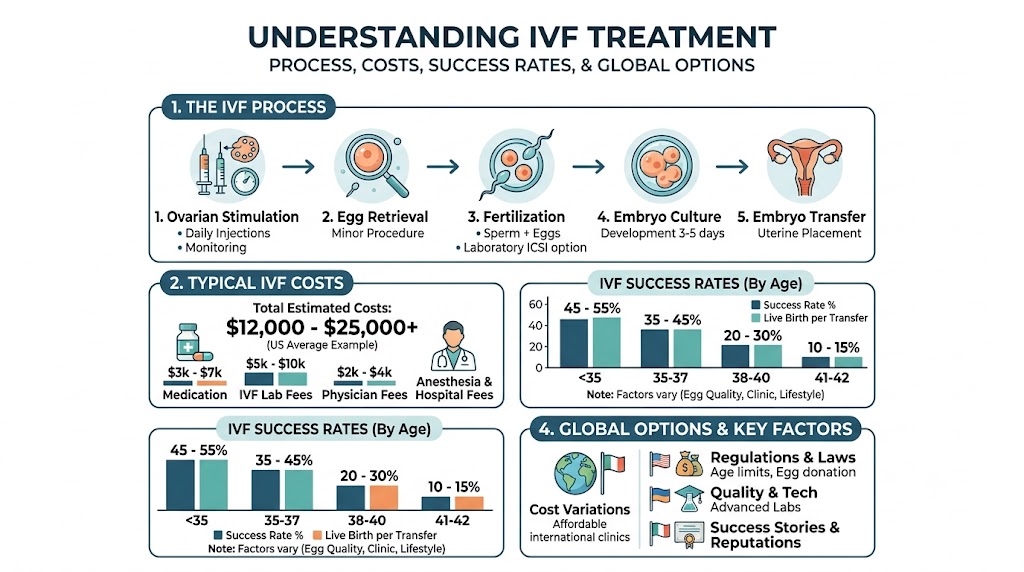
A treatment cycle begins with daily hormone medicine to help the ovaries make several eggs. Doctors track egg growth using simple blood checks and scans. Next, a doctor collects the eggs during a short visit. The lab team prepares the sperm and joins it with the eggs. Embryos grow in the lab for three to five days. Finally, a doctor transfers one embryo into the womb.
Who Looks Into Fertility Care?
People consider IVF treatment for blocked fallopian tubes, lower sperm counts, or irregular egg release. It is also an option when doctors cannot find a clear cause for delays in getting pregnant.
Exploring Modern Fertility Treatment Options
How ICSI Treatment Assists Sperm Needs
Intracytoplasmic sperm injection, known as ICSI treatment, is a extra lab step used with standard IVF. A lab expert picks one healthy sperm and puts it directly into a mature egg.
Standard IVF: Sperm and eggs mix together in a lab dish.
ICSI Method: A single sperm is placed directly inside an egg.
Specialists recommend this method when sperm count or movement is low. It is also helpful if earlier standard IVF cycles did not fertilise eggs well.
Planning Ahead with Egg Freezing
Egg freezing gives people a way to save healthy eggs for later years. The first steps are the same as a normal cycle, including hormone medicine and egg collection.
Step 1: Daily medicines help grow eggs in the ovaries.
Step 2: Eggs are retrieved during a brief clinic procedure.
Step 3: Eggs are frozen quickly and stored in a secure lab.
Instead of joining eggs with sperm right away, the lab freezes them safely. People use this choice for personal timing or before starting medical treatments like cancer care.
Breaking Down IVF Treatment Cost Items
What Makes Up the Main Price?
The full IVF treatment cost covers several basic steps. The main price usually includes initial visits, scans, egg retrieval, and embryo transfer. Extra lab steps or embryo storage will add to the final bill.
| Care Component | What It Covers | Expense Notes |
| First Visits | Doctor time, basic scans, and tests | Often billed separately from packages |
| Hormone Medicine | Daily injections for egg growth | Price depends on total dose needed |
| Basic Lab Steps | Egg collection and standard lab care | Main part of the basic package |
| Special Lab Care | ICSI treatment or embryo testing | Billed as additional lab choices |
| Freezing & Storage | Embryo freezing and yearly fees | Ongoing cost for stored embryos |
Medicine and Testing Expenses
Prescription hormone medicines form a large part of overall spending. The price changes based on the amount of medicine your doctor orders. Pre-treatment blood tests and scans also affect total costs.
Reviewing IVF Cost by Country and Travel Steps
Comparing Pricing Around the World
When reviewing IVF cost by country, prices vary because of local health laws and clinic running costs. Many patients compare regional choices to find practical care.
United States: Higher average price; modern lab technology.
United Kingdom: Public health care options and private clinics.
India: Affordable care; modern clinics and trained teams.
Spain & Greece: Popular European choices with clear donor laws.
Czech Republic: Budget-friendly care; clear clinic rules.
The numbers below show estimated average costs for one basic cycle. Prices change over time and do not guarantee final bills.
- United States: $12,000 to $15,000 for one basic cycle (without medicines).
- United Kingdom: £4,000 to £6,000 for a private cycle.
- Spain: €4,500 to €6,500 for standard treatment.
- India: $2,500 to $4,500 per basic treatment attempt.
Planning for IVF Abroad
Going overseas for IVF abroad requires careful planning past basic medical fees. You need to budget for flights, hotel stays, local rides, and time off work.
Legal Rules and Follow-Up Care
Countries have different rules for age limits, donor privacy, and embryo storage duration. Always make sure your local doctor can provide follow-up care when you return home.
How to Compare Fertility Clinics Wisely
Checking Doctor Training and Experience
When you compare fertility clinics, start by checking the credentials of the medical team. Confirm that doctors have proper certifications in reproductive health. Skilled lab leaders are also vital for keeping eggs and embryos safe.
Clear Fees and Patient Support
Trustworthy IVF clinics explain all care steps, potential risks, and fees from the start. Pick clinics that give itemized price lists with no hidden fees. Helpful staff and fast answers show that a clinic values patient care.
| Point to Check | What to Look For | Why It Matters |
| Doctor Skills | Clear board certifications | Guarantees safe and skilled guidance |
| Lab Quality | Modern air filters and equipment | Protects delicate eggs and embryos |
| Clear Pricing | Written details for all fees | Avoids surprise bills after care |
| Clinic Support | Friendly and helpful nurses | Reduces stress during your care |
Understanding IVF Success Rates and Real Expectations
Factors That Influence Results
IVF success rates depend on age, egg health, and overall physical health. Results differ for every person based on their diagnosis and medical history.
Pregnancy Tests vs. Live Births
It helps to know what statistical terms mean when reading clinic data. A positive pregnancy test shows early success, but live birth statistics track completed deliveries.
Always look at data calculated per embryo transfer instead of per patient start. Age stays the most important factor in overall results.
Important Questions to Ask Your Doctor
Bringing a simple list of questions helps you get helpful answers during your consult.
- Which fertility treatment options fit my health needs best?
- Why ask: Helps build a medical plan tailored to your specific situation.
- Do we need ICSI treatment for our care cycle?
- Why ask: Keeps you from paying for extra lab work unless necessary.
- What overall IVF treatment cost should we expect for the full cycle?
- Why ask: Helps you budget for medicines, tests, and cycle steps upfront.
- How does your team report IVF success rates to regulatory groups?
- Why ask: Confirms that clinic numbers follow clear national standards.
- What steps do we take if the first attempt does not work?
- Why ask: Helps you plan for future attempts, frozen transfers, or cost changes.
Frequently Asked Questions
1. What is the usual IVF treatment cost around the world?
Costs change depending on the country and required care. Basic cycles range from $2,500 in some regions to over $15,000 in others, not counting medicines.
2. How do age and medical health change IVF success rates?
Egg quality and count lower as age increases. Younger patients usually see higher success rates per attempt.
3. What makes standard IVF different from ICSI treatment?
Standard IVF lets sperm and eggs join on their own in a lab dish. ICSI puts one sperm directly inside an egg.
4. Why do people choose egg freezing?
People freeze eggs to save options for later, focus on personal goals, or protect fertility before medical treatments.
5. How can I safely compare fertility clinics in other countries?
Check doctor certifications, transparent pricing lists, clear result reports, and high lab safety standards.
6. What extra fees add to the total IVF cost by country?
Daily medicines, blood tests, genetic testing of embryos, and travel expenses often increase final spending.
7. Is it safe to travel for IVF abroad?
Yes, as long as you pick accredited clinics with trained doctors and modern medical standards.
8. What basic fertility treatment options exist today?
Common choices include fertility medicines, intrauterine insemination, standard IVF, ICSI care, and donor egg care.
9. How many visits to IVF clinics are needed during one cycle?
A basic cycle needs several short visits over three to four weeks for tests, scans, egg collection, and transfer.
10. Does a high clinic success rate promise good results for everyone?
No. Success numbers depend on the patient groups accepted by a clinic, so personal health factors matter most.
Conclusion
Planning your path through IVF treatment means balancing good medical guidance, practical costs, and your personal goals. Learning about methods like egg freezing or extra lab steps helps you feel in control of your journey.
Take time to verify clinic credentials and check itemized pricing lists before making choices. Comparing your choices carefully helps you prevent extra costs and stay focused on your family plans. Information platforms offer neutral guidance to support your research. Always discuss your plan with a qualified fertility specialist to choose the safest path for your health.