Introduction
Getting a robot to walk or roll across a floor is a fun challenge, but making sure it runs safely every single day is a real test. When an automated helper stops working in a busy shipping center, the whole workflow slows to a crawl. Smart teams use a specific method called RobotOps to solve this problem. This practice brings software management and mechanical care together. This article looks at how modern Robotics Operations keep hardware healthy, efficient, and ready for work. You will see how engineers rely on Robot Fleet Management and smart Robotics Software to supervise dozens of active machines at the same time. Let us dive into the world of industrial automation and see how clever digital systems keep physical helpers on track.
What Is RobotOps?
Think of RobotOps as a support system for automated machines. Just like computer experts look after cloud servers, these specialists look after mobile units. It blends standard software engineering with hands-on mechanical maintenance.
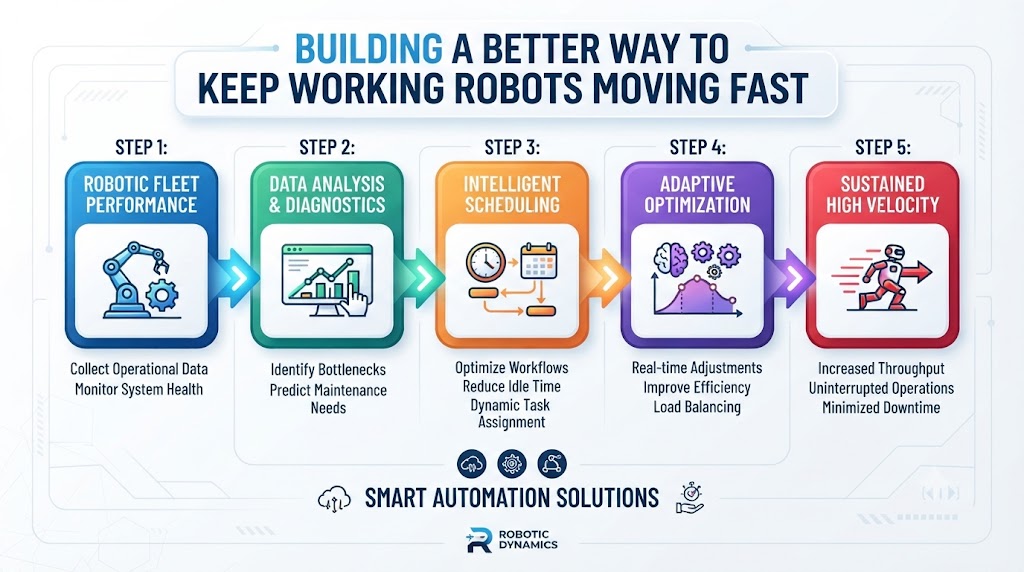
As a machine travels through a warehouse, it constantly sends data back to the base computer. This stream of information is known as telemetry. Telemetry means data sent by a robot about its status and activity. Operators watch these updates to check if a motor is overheating or if a battery is losing its charge too fast.
Through proper Robotics Operations, technicians can catch trouble early. Fixing a worn part before it breaks saves valuable hours and protects human coworkers from accidents.
Controlling Many Machines At The Same Time
Managing one automated cart is easy. Managing fifty of them at once requires serious coordination. This is where Robot Fleet Management becomes essential. It acts as the central brain that oversees a large group of mechanical workers.
Fleet software tracks the exact position of every unit on the floor. It ensures two machines do not try to occupy the same aisle at the same time. It also pushes out code updates during quiet night hours when the machines are docked.
Key Fleet Tasks
- Watching real-time positions and power levels.
- Sending out daily chores to the closest available unit.
- Delivering automatic software upgrades over the air.
- Spotting early warning signs before a mechanical failure happens.
Keeping The Factory Floor Moving
Modern manufacturing facilities depend heavily on Industrial Robotics to assemble products, weld heavy frames, and pack boxes. These tireless machines do a lot of heavy lifting, but they still require steady oversight and reliable control setups.
In these busy environments, you will frequently spot Autonomous Mobile Robots gliding past workstations. These smart delivery units carry heavy loads across long distances without needing a human operator. They use onboard sensors and cameras to spot people and obstacles, coming to a gentle halt if anything blocks their path.
Common Industrial Machine Categories
| Machine Type | Primary Task | Typical Environment |
|---|---|---|
| Articulated Arm | Heavy lifting and spot welding | Automotive plants |
| Transport Carrier | Moving raw materials | Logistics warehouses |
| Floor Scrubber | Automated nightly cleaning | Large retail spaces |
The Digital Foundation: Software And Virtual Testing
No machine can move an inch without clear instructions. Robotics Software provides the logic that dictates how wheels turn and sensors react to the environment.
Before pushing new code to an expensive physical machine, developers test everything using Robot Simulation. A simulation is a virtual computer environment where a digital model of the machine practices its daily routine. If the virtual prototype crashes into a digital wall, no real hardware gets damaged.
Many modern developers build these tools on top of ROS 2, which stands for Robot Operating System 2. It is a shared framework that allows different parts of a machine’s software to communicate smoothly.
Scaling Up Through Advanced Automation
As companies expand, they look for ways to speed up production. This drive leads to Robotics Automation, the practice of using machines to handle repetitive, heavy, or dangerous tasks.
When a business scales up its machine count, it often builds a dedicated Robotics Operations Center. This central command room features large display walls where supervisors monitor live feeds, investigate system alerts, and take manual control of any stuck machine from a distance.
For people looking to master these concepts and improve workplace workflows, platforms like RobotsOps.com provide helpful technical knowledge and educational resources.
Frequently Asked Questions About RobotOps
What does RobotOps mean? It means applying software development and operations practices to manage, monitor, and update working robots efficiently.
Why are robotics operations necessary? They help organizations keep machines running smoothly, minimize unexpected downtime, and coordinate large groups of units without chaos.
How does robot fleet management operate? It uses central software platforms to track positions, distribute tasks, manage charging cycles, and update software across multiple machines.
What are autonomous mobile robots? They are intelligent machines that navigate warehouses and factories independently to transport materials safely.
Why do engineers rely on robot simulation? It allows developers to test new code in a safe virtual space before deploying it onto physical machines in the real world.
What is ROS 2? It is a widely used open-source software framework that helps programmers build applications for various types of robotic hardware.
What is robot telemetry? It is the ongoing stream of operational data that a machine transmits back to its operators regarding its health and activity.
Can robots be managed from far away? Yes. Operators can review live sensor feeds and handle remote operations if a machine runs into an unexpected obstacle.
What happens inside a robotics operations center? Technicians track fleet performance, analyze telemetry feeds, review warning flags, and manage daily system incidents.
How can newcomers start learning about this technology? Educational websites like RobotsOps.com offer great guides, technical articles, and learning paths for students and professionals.
Final Thoughts
Running a successful robotics program requires a careful balance of physical hardware and smart software. As more machines enter our workplaces, keeping them organized becomes critical. By using modern management tools, watching operational data closely, and testing code safely, teams can keep their systems performing at their best. Whether you are a student, a developer, or an automation professional, learning how these systems work opens the door to a reliable and efficient future.