Introduction
Facing a cancer diagnosis is one of life’s most challenging moments. When you or a loved one receives this news, it is completely natural to feel overwhelmed by the choices ahead. Finding the right medical team, a trusted hospital, and a suitable treatment plan are vital steps that can greatly influence your comfort, confidence, and healing journey.
Navigating oncology care requires clear information and compassionate guidance. This comprehensive guide from CANCERSHOSPITAL is designed to help you understand how to compare cancer doctors, hospitals, and treatment options so you can make safe, informed choices for your health and well-being.
Why Comparing Cancer Doctors, Hospitals, and Treatments Matters
When a health crisis arises, the urge to rush into treatment is strong. However, making decisions without proper research can lead to added stress and uncertainty.
A thoughtful comparison helps you evaluate several crucial elements:
- Quality of Medical Care: Ensuring the treatments follow proven, high standards of safety and excellence.
- Doctor Experience: Finding an oncologist who has deep knowledge of your specific condition.
- Hospital Facilities: Confirming the center has advanced equipment and specialized oncology departments.
- Available Treatment Options: Exploring whether surgery, medication, radiation, or other therapies fit your needs.
- Patient Safety: Knowing that the clinical team follows rigorous protocols to protect you.
- Support Services: Accessing nutrition, counseling, and recovery guidance to care for your whole self.
Taking time to compare options helps replace anxiety with clarity, giving you a steady foundation as you begin treatment.
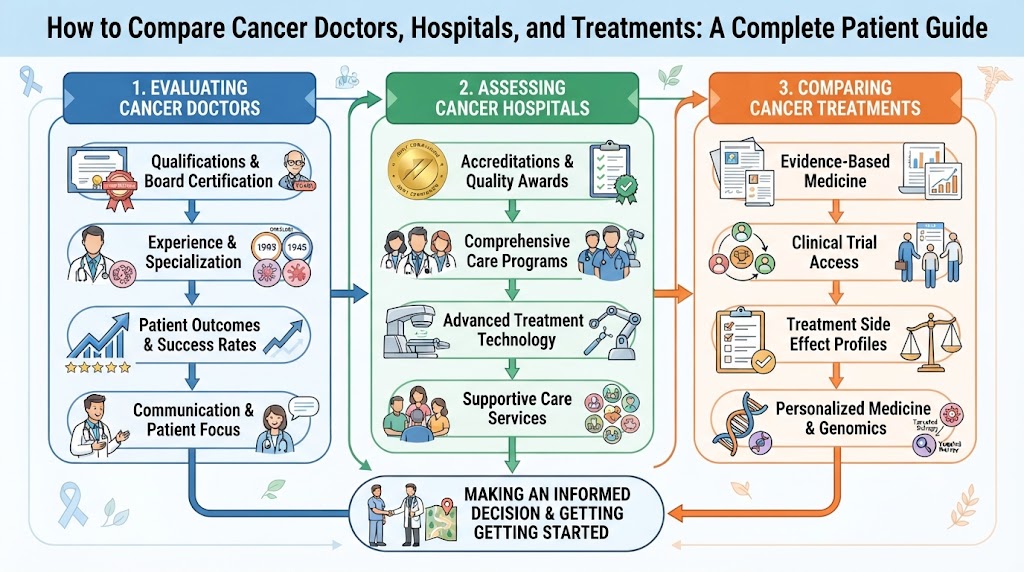
How to Compare Cancer Doctors
Your relationship with your oncologist will be central to your care. Evaluating a specialist goes beyond reviewing a medical degree.
Oncology Experience and Specialization
Cancer is a diverse group of diseases, and treatments vary widely. A doctor who specializes closely in your specific type of cancer brings invaluable insights.
- Years of experience: Check how long the specialist has been practicing in oncology.
- Cancer type specialization: Ensure the doctor routinely treats your exact diagnosis rather than generalized conditions.
- Treatment expertise: Look at their familiarity with modern therapies and clinical pathways.
- Experience with similar cases: Knowing your doctor has successfully guided patients through similar situations builds immense trust.
Qualifications and Medical Training
Review where the oncologist completed their medical education, residency, and specialized oncology fellowships. Board certifications and professional memberships show that the doctor maintains high standards of medical practice.
Treatment Planning Approach
A great cancer doctor does more than prescribe treatment; they partner with you. Look for an oncologist who listens carefully, explains options in plain English, encourages questions, and values your input in treatment decisions.
Patient Outcomes and Experience
Listening to or reading about other patients’ experiences can offer helpful perspective on a doctor’s compassion, communication style, and bedside manner.
How to Compare Cancer Hospitals
The environment where you receive care plays an essential role in your comfort and safety.
Hospital Reputation and Quality Standards
A trustworthy cancer hospital is built on a track record of safety, ethical patient care, and consistent medical excellence. Look for institutions that hold official healthcare accreditations.
Cancer Treatment Facilities and Technology
Modern cancer care relies heavily on advanced infrastructure. Check if the hospital features:
- Advanced diagnostic tools for accurate staging and monitoring
- Modern, well-equipped treatment rooms for therapies
- Specialized oncology wards designed for patient comfort
- Clean, reliable laboratory and imaging services
Multidisciplinary Cancer Care Team
Cancer treatment rarely involves just one doctor. The best care usually comes from a collaborative team working together under one roof. Check if the hospital brings together medical oncologists, surgeons, radiation specialists, and support staff who coordinate your care plan seamlessly.
Patient Support and Recovery Services
Healing requires more than clinical procedures. Look for hospitals that provide nutritional counseling, emotional support groups, pain management specialists, and clear recovery guidance.
How to Compare Cancer Treatments
Understanding your treatment options helps you feel more in control of your health journey.
Understanding Cancer Type and Stage
Treatment decisions are never one-size-fits-all. They depend heavily on:
- The exact type and location of the cancer
- The stage or extent of the disease
- Your overall health and personal preferences
- Professional medical recommendations
Available Treatment Options
Depending on your diagnosis, your medical team may discuss several common approaches:
- Surgery: Removing the tumor or affected tissue when appropriate.
- Chemotherapy: Using specialized medications to target and destroy cancer cells.
- Radiation therapy: Using targeted energy beams to eliminate cancer cells in specific areas.
- Targeted therapies: Advanced treatments designed to attack specific vulnerabilities in cancer cells.
Always discuss these options thoroughly with a qualified oncologist to understand what is best for your situation.
Treatment Safety and Expected Results
Before beginning any therapy, make sure you understand the expected goals, the potential duration of treatment, what side effects to anticipate, and how your care team plans to manage them.
Important Factors Before Choosing Cancer Care
Doctor Expertise
Always prioritize oncologists with dedicated experience in treating your specific type of cancer. Specialized knowledge makes a significant difference in personalized care planning.
Hospital Quality
Ensure the facility is clean, well-resourced, and follows strict safety protocols to protect your health during vulnerable periods.
Treatment Cost
Plan ahead by reviewing the full scope of expected expenses, including doctor fees, treatment sessions, medications, and any long-term care needs. Balance affordability with high standards of medical safety.
Location and Accessibility
Consider travel convenience, lodging options for family members, and how easy it will be to return for follow-up appointments after initial treatments.
Cancer Doctor vs Cancer Hospital vs Treatment Comparison Table
| Factor | What to Check | Why It Matters |
| Cancer Doctor | Experience, specialization, treatment approach | Helps choose the right oncology expert |
| Cancer Hospital | Facilities, technology, cancer care services | Supports quality treatment |
| Cancer Treatment | Options, safety, expected outcomes | Helps understand suitable care choices |
Common Mistakes Patients Make While Choosing Cancer Care
- Choosing treatment only based on cost: Opting for the cheapest choice can sometimes mean compromising on safety standards, modern technology, or specialist expertise.
- Solution: Balance your budget by prioritizing medical quality, safety, and proper support systems first.
- Ignoring cancer specialist experience: Selecting a general physician or a doctor without a specific focus on your type of cancer.
- Solution: Seek out board-certified oncologists who specialize directly in your diagnosis.
- Not researching hospital facilities: Overlooking the importance of clean, advanced, and well-equipped oncology centers.
- Solution: Choose accredited hospitals with dedicated cancer care units and multidisciplinary teams.
- Not understanding treatment options: Accepting a plan without asking questions or exploring alternative recommendations.
- Solution: Take time to discuss your diagnosis, ask for explanations, and seek second opinions if needed.
- Forgetting emotional and recovery support: Focusing exclusively on medical procedures while ignoring emotional well-being and rehabilitation.
- Solution: Look for hospitals that offer counseling, nutrition, and holistic support services.
Step-by-Step Guide to Choosing the Right Cancer Care
Step 1: Understand Your Cancer Condition
Obtain a clear diagnosis and learn the basic details about your health needs and staging from your medical team.
Step 2: Research Cancer Doctors
Look for experienced oncologists who specialize in your specific type of cancer and read about their practice background.
Step 3: Evaluate Cancer Hospitals
Examine hospital accreditations, technological capabilities, and the presence of dedicated cancer care teams.
Step 4: Understand Treatment Options
Discuss available medical pathways with your specialists to weigh the pros and cons of each approach.
Step 5: Make an Informed Decision
Choose the care plan and medical team that offer the best balance of safety, clinical expertise, and personal comfort.
How CANCERSHOSPITALS Helps Patients
Navigating a cancer diagnosis can feel lonely, but you do not have to walk the path alone. CANCERSHOSPITALS.COM is designed to simplify this journey for patients and families by providing clear, reliable information.
- Understanding cancer treatment options: Access easy-to-read guides that explain various therapies and medical approaches.
- Learning about cancer hospitals: Discover trusted medical centers known for excellence in oncology care.
- Exploring healthcare choices: Review structured details about specialists, facilities, and options in one convenient place.
- Supporting better treatment decisions: Gain the clarity and confidence required to take charge of your health journey.
Benefits of Comparing Cancer Care Options
- Better understanding of treatment choices tailored to your health
- Increased confidence and reduced anxiety about the road ahead
- Finding skilled specialists who match your specific medical needs
- Better treatment planning that accounts for recovery and daily life
- Reduced confusion through clear, well-organized information
- An improved overall healthcare and healing experience
Frequently Asked Questions (FAQs)
1. Why should patients compare cancer doctors before treatment?
Answer: Comparing cancer doctors helps you find an oncology specialist with focused expertise in your exact diagnosis, ensuring more accurate care planning and personalized treatment.
2. What factors should be considered when choosing a cancer doctor?
Answer: You should consider the doctor’s years of experience, specialization in your cancer type, communication style, and commitment to involving you in decisions.
3. How can patients compare cancer hospitals?
Answer: Patients can compare hospitals by looking at official healthcare accreditations, specialized oncology units, advanced technology, and multidisciplinary support teams.
4. Should cancer treatment decisions depend only on cost?
Answer: No. While financial planning is essential, choosing treatment based solely on low cost can compromise safety and care quality. It is crucial to balance cost with high medical standards.
5. Why is cancer doctor specialization important?
Answer: Cancer encompasses many different diseases requiring distinct approaches. A specialized oncologist understands the nuances of your specific condition, leading to more targeted and effective care.
6. What should patients know before selecting cancer treatment?
Answer: Patients should understand their diagnosis, the goals of the proposed treatment, potential side effects, expected timelines, and what recovery will involve.
7. Why are support services important during cancer care?
Answer: Support services like nutrition counseling, emotional support, and pain management address the physical and emotional toll of treatment, improving overall quality of life.
8. How does research help patients choose better cancer care options?
Answer: Proper research removes uncertainty, empowers you to ask meaningful questions, and ensures you partner with qualified professionals dedicated to your safety and recovery.
Final Thoughts
Choosing the right cancer doctor, hospital, and treatment plan requires careful research and thoughtful consideration. Taking the time to compare your options helps you step forward with confidence, clarity, and peace of mind.
Always prioritize clinical expertise, safety standards, and comprehensive support services over quick solutions. Platforms like CANCERSHOSPITALS are here to guide you every step of the way, helping you find clear answers and trusted care so you can focus entirely on what matters most: your health, your strength, and your healing.