Introduction
When urological symptoms arise, finding reliable information can feel overwhelming. Issues involving the kidneys, bladder, prostate, and urinary tract demand careful attention, accurate diagnostics, and expert medical guidance. Platforms like UrologyHospitals.com exist to help patients, caregivers, and individuals seeking health insights make sense of complex urological conditions, explore therapeutic pathways, and understand what to look for in modern healthcare facilities.
This guide takes a fresh approach to understanding urology, breaking down how specialists diagnose and treat common and complex conditions, what to expect from advanced procedures, and how to make informed healthcare choices.
Understanding Urological Care and the Healthcare Landscape
Urology is the medical discipline dedicated to the health and function of the urinary tract across all genders, as well as the male reproductive system. The organs responsible for filtering waste, regulating fluid balance, and managing elimination—such as the kidneys, ureters, bladder, and urethra—are vital to daily well-being.
When these systems face disruptions, whether through acute infections, structural blockages, or chronic diseases, timely intervention is critical. Effective urological care relies on the seamless collaboration between advanced diagnostic infrastructure and skilled clinicians. Resources such as UrologyHospitals.com help demystify this process, guiding readers through the intricacies of hospital selection, specialist expertise, and modern treatment options.
Recognizing Common Symptoms and Warning Signs
The body often signals urological distress through clear warning signs. While these symptoms can overlap across various conditions, acknowledging them early can prevent minor issues from escalating:
- Discomfort or Pain: Aches or sharp pains located in the lower back, flank, abdomen, or pelvic zone.
- Altered Urination Habits: Sudden urgency, waking multiple times at night to urinate (nocturia), or an increased overall frequency.
- Irritation: A burning or stinging sensation during urination.
- Visible Hematuria: The presence of blood, which may turn urine pink, red, or brownish.
- Incontinence: Accidental leakage or difficulty maintaining control over bladder function.
- Flow Changes: A weak urine stream, straining, or the sensation that the bladder has not emptied completely.
- Fever and Chills: Systemic signs that can accompany severe urinary infections.
Note: Symptoms serve as indicators, not definitive proof of a specific condition. A professional medical assessment is always necessary to uncover the root cause.
Underlying Causes and Risk Factors
Urological conditions rarely stem from a single source; rather, they are typically influenced by a mix of biology, genetics, and lifestyle factors:
- Age and Anatomy: Aging naturally shifts prostate health in men, while anatomical differences make women statistically more susceptible to certain infections.
- Hereditary Patterns: Family histories of kidney stones or urological malignancies can elevate personal risk profiles.
- Daily Habits: Diets high in sodium or oxalate, insufficient water intake, and tobacco use play major roles in stone formation and bladder health.
- Systemic Health: Conditions like diabetes, hypertension, and neurological disorders frequently impact bladder function.
- Physical Obstructions: Structural narrowing or scar tissue within the urinary tract can alter normal flow dynamics.
Diagnostic Pathways and Medical Evaluations
A precise diagnosis is the cornerstone of any effective treatment plan. When a patient visits a urology specialist, a structured diagnostic protocol is usually followed:
- Clinical History and Physical Exam: Reviewing medical history, lifestyle factors, and conducting targeted exams.
- Laboratory Analysis: Urinalysis and cultures to pinpoint infections, alongside blood panels (such as serum creatinine) to measure kidney function.
- Advanced Imaging: Ultrasounds, CT scans, and MRIs that offer high-resolution maps of the urinary system.
- Cystoscopy: Using a slender, illuminated instrument to visually inspect the interior lining of the bladder and urethra.
- Urodynamic Studies: Testing how efficiently the bladder stores and expels urine.
- Tissue Biopsy: Securing microscopic samples when abnormal growths or malignancies require verification.
Modern Urology Treatment Strategies
Management plans in urology are entirely individual, shaped by diagnosis severity, overall health, and patient preferences. Options typically fall along a spectrum:
- Active Observation: Monitoring stable conditions closely through regular check-ups rather than immediate intervention.
- Medical Management: Utilizing targeted prescription drugs to ease symptoms, reduce inflammation, or clear bacterial infections.
- Minimally Invasive Techniques: Employing scope-based procedures, laser energy, or acoustic waves to resolve internal blockages without large incisions.
- Surgical Options: Ranging from standard open procedures to highly complex reconstructions.
The Vital Role of Urology Specialists
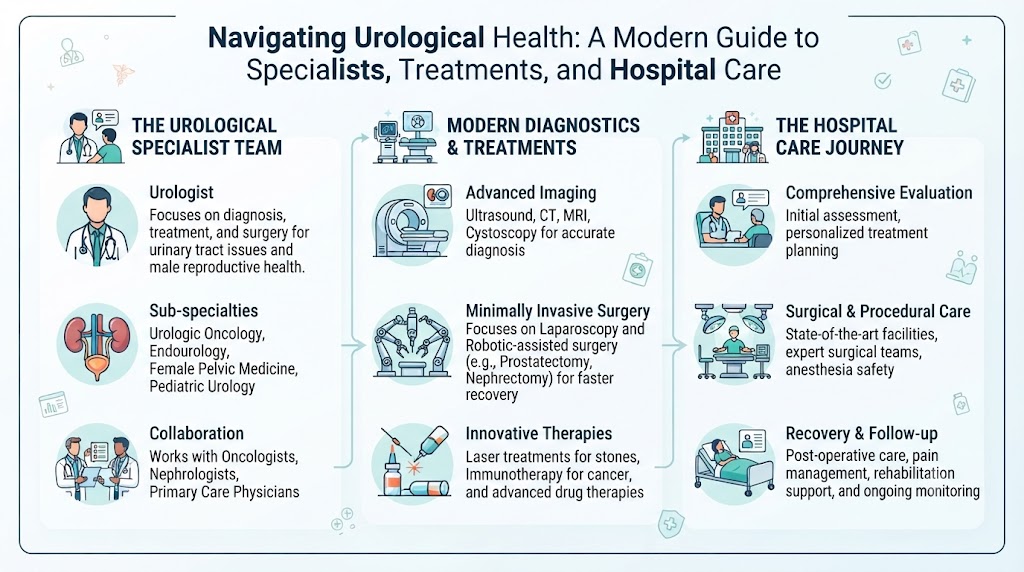
Urologists are medical professionals who undergo intensive training focused exclusively on the urinary tract and male reproductive organs. Their clinical responsibilities include:
- Decoding complex diagnostic data to reveal underlying issues.
- Designing multi-phase therapeutic strategies that balance disease control with quality of life.
- Executing intricate surgical procedures with microscopic precision.
- Collaborating with oncologists, nephrologists, and primary physicians to deliver comprehensive care.
Managing Kidney Stones
Kidney stones develop when minerals and salts crystallize inside the kidneys, potentially traveling down the ureters to cause intense flank pain and nausea. While small stones often pass independently with heavy hydration, larger blockages demand medical intervention.
Kidney stone treatment varies by size and composition. Shock wave lithotripsy (SWL) uses external acoustic pulses to shatter stones into passable dust. Ureteroscopy allows a specialist to navigate a tiny scope up the tract and utilize lasers to fragment the stone. For massive deposits, percutaneous nephrolithotomy (PCNL) utilizes a minor back incision for direct extraction. Long-term management always emphasizes dietary adjustments and metabolic screening to prevent recurrence.
Prostate Cancer Care and Considerations
Prostate cancer is among the most common malignancies diagnosed in men, often growing slowly over time. Evaluation usually involves prostate-specific antigen (PSA) testing, advanced MRI imaging, and targeted biopsies.
Prostate cancer treatment depends heavily on tumor grade, stage, and overall patient health. For low-risk, localized cases, active surveillance may be chosen to monitor the disease safely without immediate side effects. When therapeutic action is required, options include radical prostatectomy (surgical removal), radiation therapy, or systemic medical protocols. Decisions require thorough conversations with specialists to weigh oncological safety against functional preservation.
Managing an Enlarged Prostate (BPH)
Benign prostatic hyperplasia (BPH) is a non-cancerous enlargement of the prostate gland that occurs naturally as men age, causing weak streams and frequent nighttime trips to the bathroom.
Enlarged prostate treatment starts with monitoring and mild lifestyle adjustments. If symptoms worsen, medications like alpha-blockers can relax surrounding muscle tissue. When drugs are insufficient, minimally invasive tissue-reduction procedures or traditional surgeries (such as TURP) can clear the blockage and restore normal urinary flow.
Treating Urinary Tract Infections (UTIs)
UTIs happen when bacteria breach the urinary defenses, resulting in bladder infections (cystitis) or kidney infections (pyelonephritis). Common symptoms include burning urination, pelvic pressure, and persistent urges.
Urinary tract infection treatment primarily relies on targeted antibiotic courses determined by lab cultures. Patients must finish all prescribed doses even if symptoms vanish early. For those experiencing frequent, recurring infections, specialists look deeper for anatomical triggers to build long-term prevention plans.
Bladder Cancer Approaches
Bladder cancer begins in the inner lining of the organ and often presents with painless blood in the urine. Diagnosis relies heavily on cystoscopy and tissue sampling.
Bladder cancer treatment is dictated by how deeply the cancer has invaded. Early, non-muscle-invasive tumors are often removed via transurethral resection (TURBT), sometimes paired with intravesical medications instilled directly into the bladder. Advanced cases may necessitate a cystectomy (bladder removal), reconstructive urinary diversion, or systemic therapies, followed by lifelong surveillance.
| Treatment Approach | Typical Application | Key Benefits | Important Considerations |
| Active Surveillance | Low-risk, slow-moving conditions | Avoids premature side effects; protects daily routine | Demands strict adherence to routine check-ups |
| Minimally Invasive Tech | Stones, targeted obstructions, localized lesions | Smaller marks, shorter hospital stays, faster bounce-back | Relies on anatomical suitability and operator skill |
| Systemic Medication | Infections, advanced disease stages | Fights disease body-wide; manages chronic symptoms | Requires monitoring for adverse drug reactions |
The Evolution of Robotic Urology Surgery
Surgical innovation has transformed how complex procedures are performed. In robotic urology surgery, the physician operates a console that translates hand movements into micro-instrument gestures inside the patient’s body.
This platform offers high-definition, 3D visualization and exceptional maneuverability, making it particularly useful for intricate operations like radical prostatectomies or partial kidney removals. While robotic technology enhances precision, clinical outcomes remain fundamentally tied to the expertise and experience of the human surgeon.
Evaluating Urology Hospitals and Specialists
Choosing the right facility and doctor shapes the entire healthcare experience. When researching urology hospitals, consider these practical benchmarks:
- Specialist Credentialing: Verify board certifications and specialized training in fields like uro-oncology or endourology.
- Infrastructure: Look for robust diagnostic imaging, modern surgical suites, and specialized laboratories.
- Comprehensive Care: Access to a broad spectrum of medical, minimally invasive, and surgical services under one roof.
- Collaborative Networks: Integration with pathology, radiology, and nephrology departments.
Platforms like UrologyHospitals.com serve as helpful compasses for patients learning how to evaluate these healthcare credentials.
| Evaluation Factor | Why It Matters to Patients |
| Specialist Expertise | Guarantees precise diagnosis and expert management of intricate cases. |
| Diagnostic Setup | Facilitates accurate, rapid testing without unnecessary delays. |
| Therapeutic Breadth | Allows access to a full range of treatment alternatives tailored to you. |
| Surgical Volume | Correlates with refined procedural technique and smoother recoveries. |
| Continuity of Care | Supports long-term monitoring and post-treatment rehabilitation. |
Finding a Specialist Near You
When searching for a urologist near me, look beyond simple geography. Evaluate the doctor’s specific focus areas, hospital affiliations, and communication style. If you are facing a major surgical or oncological choice, seeking a second opinion from another qualified specialist is standard, prudent practice.
Questions to Bring to Your Consultation
Empower your medical appointment by asking direct, practical questions:
- What is my exact diagnosis, and what factors caused it?
- Are additional diagnostic tests necessary before deciding on a plan?
- What treatment options—surgical and non-surgical—are available to me?
- What are the potential risks and benefits associated with each choice?
- What does the typical recovery timeline look like?
- How might this intervention affect my long-term urinary and daily life?
- What post-treatment lifestyle modifications should I anticipate?
When to Seek Urgent Medical Attention
While many urological concerns develop slowly, certain red flags require immediate care:
- A complete inability to urinate.
- Severe, unmanageable flank or pelvic pain.
- Heavy, persistent bleeding or large blood clots in the urine.
- High fever, shaking chills, or vomiting accompanying urinary discomfort.
Preparing for Your Appointment
- Log Your Symptoms: Write down when symptoms started, how often they occur, and what triggers them.
- Compile Medications: Bring a complete list of prescription drugs, over-the-counter products, and supplements.
- Gather Records: Collect previous lab reports, imaging CDs, and physician notes.
- Bring Your Questions: Keep your written list of questions accessible so nothing is overlooked.
Frequently Asked Questions
What conditions does a urologist treat?
Urologists manage diseases affecting the urinary tracts of men and women, alongside the male reproductive system, covering conditions from kidney stones and infections to prostate disorders and cancers.
How do I know if I need a specialist instead of my family doctor?
While primary care physicians handle initial symptoms, a urologist is typically required for persistent hematuria, recurrent infections, complex stones, elevated PSA readings, or conditions requiring surgical evaluation.
Are kidney stones preventable?
Yes, many stones can be prevented through lifestyle modifications, increased daily water intake, and dietary adjustments guided by metabolic evaluations.
Is an enlarged prostate considered a form of cancer?
No. Benign prostatic hyperplasia (BPH) is a non-cancerous growth of the prostate gland. While symptoms can mimic cancer, they are entirely separate biological processes.
What should I expect during a cystoscopy?
A cystoscopy involves inserting a thin, specialized scope through the urethra into the bladder, allowing a doctor to inspect the internal lining for abnormalities.
How does robotic-assisted surgery differ from traditional open surgery?
Robotic surgery uses specialized computer consoles and tiny instruments to perform operations through smaller incisions, offering enhanced visualization and instrument control.
How can I assess the quality of a urology hospital?
Look for verified specialist credentials, advanced diagnostic technology, multidisciplinary care teams, and adherence to established healthcare safety standards.
Is a second opinion necessary for major urology procedures?
Seeking a second opinion is a standard and encouraged practice when facing major surgical or cancer treatment choices, ensuring you feel completely confident in your path forward.
Conclusion
Urological health is an integral part of overall vitality. By understanding basic anatomy, recognizing early warning signs, and staying informed about diagnostic and treatment options, patients can actively participate in their healthcare journey. Whether addressing stone management, prostate health, or complex surgical needs, partnering with qualified urology specialists ensures informed, compassionate care. Always consult a licensed medical professional for personal diagnoses and individualized treatment plans.