Introduction
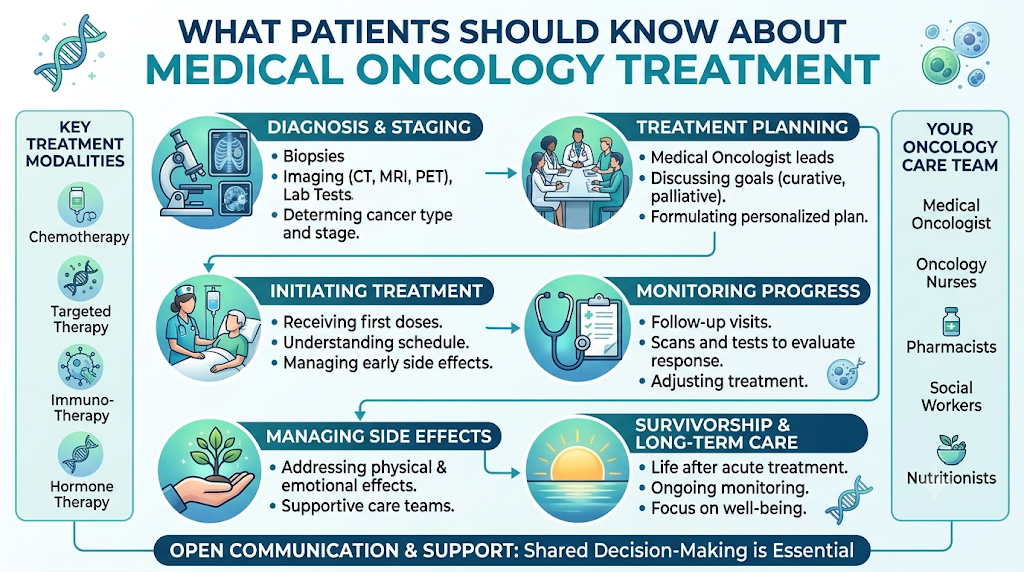
Medical oncology is a key branch of cancer care that relies on medicine to treat cancer. A treatment plan may include chemotherapy, immunotherapy, targeted therapy, or hormone therapy. The best approach depends on your specific cancer type, stage, test results, and overall health. Learning about your options helps you prepare for care. Understanding your plan makes it easier to manage side effects and follow-up visits.
Understanding Medical Oncology
Medical oncology focuses on treating cancer using various types of medicines. A medical oncologist is a doctor who receives special training to diagnose and manage cancer care. These specialists plan, guide, and oversee medicine-based treatments.
Medicines can be given before surgery to shrink a tumour, or after surgery to kill any remaining cancer cells. For some patients, medical treatment serves as the primary way to manage cancer. Medical oncologists often work alongside surgeons and radiation specialists to form a complete care team. Every patient receives a personalized plan tailored to their specific health needs.
What Does a Medical Oncologist Do?
A medical oncologist guides you through every step of your cancer treatment journey. They take time to review your full medical history and lab reports.
- They evaluate your specific cancer type and disease stage.
- They discuss suitable treatment paths with you and your family.
- They design a personalized, medicine-based care plan.
- They closely monitor how your body responds to the medicines.
- They help you prevent and manage treatment side effects.
- They coordinate your care with other medical specialists.
- They outline long-term follow-up visits and health checks.
When Might a Patient Need Medical Oncology Treatment?
Medicine-based cancer care is useful in many clinical situations. It is often recommended if cancer has spread to nearby tissues or distant parts of the body.
Doctors may use medicines before surgery to reduce the size of a tumour. They may also give medicines after surgery to lower the risk of cancer coming back. Some types of cancer respond best to medicine rather than surgery. In other cases, medicines are combined with radiation therapy to boost results. When a complete cure is not possible, medical oncology helps manage the disease and maintain your quality of life.
Types of Medical Oncology Treatment
Doctors use different categories of medicine based on your specific cancer profile.
Chemotherapy
Chemotherapy uses powerful drugs to kill fast-growing cancer cells or slow their spread. Because these medicines travel throughout the body, they can also affect healthy cells. This temporary impact on normal cells is what causes common side effects like tiredness or hair loss.
Immunotherapy
Immunotherapy helps your own immune system recognize and destroy cancer cells. It boosts your body’s natural defenses to fight the disease. This modern approach works very well for specific cancers, but it may not be suitable for every patient.
Targeted Therapy
Targeted therapy focuses on unique features, proteins, or genes found inside cancer cells. These medicines block the specific signals that allow cancer to grow and divide. Doctors perform special tests to see if your tumour has the targets these drugs act on.
Hormone Therapy
Certain types of cancer use the body’s natural hormones to grow. Hormone therapy blocks or lowers these hormone levels to slow or stop cancer growth. It is commonly used for specific types of breast cancer and prostate cancer.
Other Medicine-Based Treatments
Depending on your diagnosis, doctors may prescribe other specialized cancer medicines. These may include supportive drugs that protect your bones or boost blood cell counts during active treatment.
Main Types of Medical Oncology Treatment
| Treatment Type | How It Works | Important Point |
|---|---|---|
| Chemotherapy | Uses medicines to kill or slow cancer cells | May affect some healthy cells |
| Immunotherapy | Helps the immune system fight cancer | Works for certain cancers |
| Targeted therapy | Acts on specific features of cancer cells | May require biomarker testing |
| Hormone therapy | Blocks or lowers hormones that support some cancers | Used for selected hormone-sensitive cancers |
How Doctors Decide on a Medical Oncology Treatment Plan
Creating a treatment plan requires careful medical evaluation. Your oncologist checks the exact cancer type, its stage, and the location of the tumour. They carefully review all lab findings, blood tests, and imaging scans.
Biomarker tests help show if specialized targeted drugs will work. Your age, overall health, and existing medical conditions also play a big role. Past cancer treatments and your personal goals are carefully considered. Doctors may use a single drug or combine different treatment types. Plans can be adjusted over time based on how your body responds.
Tests Before Starting Medical Oncology Treatment
Your doctor will order specific health checks before your treatment begins.
Biopsy
A biopsy removes a small sample of tissue from the body. Experts examine this sample under a microscope to confirm the exact cancer type.
Blood Tests
Standard blood tests check your overall health, liver function, and kidney health. They also provide a baseline count of your red and white blood cells.
Imaging Tests
Scans such as CT, MRI, or PET scans create detailed pictures of your internal organs. These images show the exact size, shape, and location of the cancer.
Biomarker Testing
Biomarker tests check your tumour tissue for specific genetic changes or proteins. The results tell doctors if targeted therapy or immunotherapy will work for you.
Other Health Checks
Your doctor may test your heart function, lung capacity, or hearing. These checks ensure your body can safely handle specific cancer medicines.
What Happens During Medical Oncology Treatment?
Your care begins with an in-depth visit with your medical oncologist. You will review your reports, learn about your choices, and discuss potential risks and benefits. Your team will set up a clear schedule showing when and how often you will receive medicine.
Some cancer drugs are given as an infusion into a vein at a clinic. Other medicines come as pills you take at home, or as simple injections. You will have regular check-ups and scans to monitor your progress. Your care team can adjust medicine doses whenever medically necessary to keep you safe.
Possible Side Effects of Medical Oncology Treatment
Cancer treatments can cause side effects because they affect normal, healthy cells along with cancer cells. Side effects vary depending on the drug used, the dose, and your overall health.
- Feeling very tired or lacking energy.
- Nausea, vomiting, or upset stomach.
- Temporary hair thinning or hair loss.
- Changes in taste or loss of appetite.
- Soreness or small ulcers inside the mouth.
- Low blood cell counts, which can cause anemia.
- Skin dryness, redness, or rash.
- Bowel changes like diarrhea or constipation.
- Higher risk of catching infections.
Targeted drugs and immunotherapies can also cause unique reactions like skin rashes or inflammation. Always tell your care team about any new or worsening symptoms. A fever during cancer treatment can be serious and needs urgent medical checkups. Follow your doctor’s instructions on when to seek immediate help.
How Patients Can Manage Treatment-Related Side Effects
Managing side effects is an essential part of your cancer care. Always take your prescribed supportive medicines, such as anti-nausea drugs, exactly as directed. Report new or changing symptoms to your clinic early so they can help you quickly.
Ask your team about safe foods, gentle physical activities, and proper fluid intake. Practice good personal hygiene to protect yourself from common germs. Get plenty of rest whenever you feel tired, and pace your daily tasks. Do not hesitate to ask for emotional support from counselors or family. Keeping a daily log of your symptoms helps your doctor adjust your care.
Nutrition and Daily Care During Medical Oncology Treatment
Good nutrition and healthy habits support your strength during treatment. Eat a balanced diet with a variety of nutrient-rich foods whenever you feel up to it. Drink plenty of fluids throughout the day if your doctor allows it.
If you have trouble swallowing or lose your appetite, talk to your medical team right away. Follow simple food safety steps, such as washing produce well and avoiding raw foods. Stay active with light walks if your doctor agrees. Accept help from friends and family for household chores so you can rest. A qualified clinical dietitian can help tailor a meal plan to your needs.
Emotional Support During Cancer Treatment
Dealing with a cancer diagnosis can bring up strong emotions. Feeling worried, sad, or overwhelmed before and during treatment is completely normal.
Daily routines for your family and work life may change for a while. Reaching out to supportive family members and friends can ease your mind. Professional counselors and cancer support groups offer safe spaces to share your feelings. Talking openly with your nurses and doctors helps relieve treatment anxiety. Asking for emotional help is a normal, healthy part of cancer care.
Questions Patients Should Ask a Medical Oncologist
Preparing questions for your appointment helps you feel confident and informed.
- What exact type and stage of cancer do I have?
- Which treatment options are best suited for my condition?
- Why do you recommend this specific treatment plan?
- What are the expected benefits and potential risks of this care?
- Will I receive chemotherapy, immunotherapy, targeted therapy, or hormone drugs?
- Which tests do I need before starting treatment?
- How long will my treatment plan last?
- Which common side effects should I watch for at home?
- Who should I call at the clinic if I feel unwell after hours?
- How will we check if the treatment is working?
- What kind of follow-up care will I need after treatment ends?
What Patients Should Understand Before Treatment
| Treatment Topic | Questions Patients Should Ask | Why It Matters |
|---|---|---|
| Diagnosis | What type and stage of cancer do I have? | Helps explain the condition |
| Treatment choice | Which options are suitable for me? | Helps patients understand available care |
| Tests | Do I need biomarker testing? | May guide treatment choices |
| Side effects | What symptoms should I report? | Helps patients prepare |
| Schedule | How often will I receive treatment? | Helps with daily planning |
| Cost | What expenses are included? | Helps with financial planning |
| Follow-up | Which check-ups will I need? | Supports continued care |
Factors That May Affect Medical Oncology Treatment Costs
Cancer treatment expenses vary based on several medical and logical factors. The specific type of cancer and the chosen medicines play a major role in total costs. Advanced targeted drugs or immunotherapies often cost more than standard options.
The overall number of treatment cycles and their total duration also impact your bill. Required diagnostic scans, blood work, and tissue tests add to the expense. Hospital admission fees, specialized clinic charges, and supportive medications affect the total cost too. Managing unexpected side effects may require additional care. Always ask your clinic for a written cost outline so you can plan ahead.
Follow-Up Care After Medical Oncology Treatment
Your medical care continues even after your main treatment ends. Regular follow-up visits allow your oncologist to check your recovery and overall health.
You may need periodic blood tests, physical exams, or imaging scans to monitor your body. These check-ups help doctors watch for any signs of cancer returning. Follow-up care also helps manage any long-term or late-developing side effects. Keep all your medical records, test results, and drug lists organized in a folder. Always contact your doctor right away if you notice any new or unusual physical symptoms.
How CancersHospitals Can Help Patients Understand Cancer Care
CancersHospitals provides clear, reliable information to help patients learn about cancer care and medical oncology choices. Access to accurate health facts helps you prepare for treatment and understand what to expect.
Educational guides allow you to write down meaningful questions for your clinical team. Learning about your health options gives you the confidence to make informed decisions alongside your doctor. When faced with a cancer diagnosis, working closely with qualified specialists is the best way to receive safe, effective care.
Frequently Asked Questions (FAQs)
What does a medical oncologist do?
A medical oncologist is a cancer specialist who uses medicines like chemotherapy, immunotherapy, and targeted therapy to manage and treat cancer.
Which cancers may need medical oncology treatment?
Many types of cancer may benefit from medicine-based care, including breast, lung, colon, prostate, and blood-related cancers.
What is the difference between chemotherapy and immunotherapy?
Chemotherapy acts directly to kill fast-growing cancer cells. Immunotherapy trains your body’s natural immune system to spot and fight cancer cells.
Is targeted therapy suitable for every cancer patient?
No, targeted therapy works only if your cancer cells have specific targets. Doctors use biomarker tests to check if these targets exist.
Which tests are needed before medical oncology treatment?
Patients usually need a tissue biopsy, blood tests, imaging scans like CT or PET scans, and sometimes specialized biomarker testing.
How long does medical oncology treatment usually last?
Treatment duration varies widely. It can range from a few weeks to several months or ongoing care, depending on your health and cancer type.
What are the common side effects of cancer medicines? Common side effects include fatigue, nausea, appetite changes, temporary hair loss, mouth sores, low blood cell counts, and higher infection risks.
Can patients continue daily activities during cancer treatment?
Many patients can keep up light daily routines, but you may need extra rest. Always follow your doctor’s advice regarding work and activity levels.
How do doctors check whether medical oncology treatment is working?
Doctors use periodic physical exams, blood tests, tumor marker checks, and imaging scans to monitor how the cancer responds to medicine.
Why is follow-up care important after cancer treatment?
Follow-up care helps doctors track your healing progress, manage long-term side effects, and check for any signs of the cancer returning.
Conclusion
Medical oncology plays a vital role in modern cancer care by using advanced medicines to treat disease. Your specific treatment plan depends on your cancer type, its stage, lab test results, and overall health. Learning about treatment options, potential side effects, and daily care helps you feel prepared and supported.
Stay in close contact with your medical team, ask questions, and share your concerns openly. Working together with qualified cancer specialists ensures you receive the safest, most effective care tailored to your needs.